


How to Sleep with Post-Nasal Drip
Share
Have you ever gone to bed feeling in the best of health, but then spent the night coughing, clearing your throat, or even struggling to breathe? These may be signs that you are suffering from post-nasal drip.
Post-nasal drip, now referred to as Upper Airway Cough Syndrome (UACS) [4], is a condition where mucus drainage from the nose and sinuses irritates the throat, leading to chronic coughing or throat clearing [1, 4].
The good news: with a few simple adjustments, you may be able to reduce discomfort from post-nasal drip and finally get a better night’s sleep [1].
Why Post-Nasal Drip Feels Worse at Night
Though post-nasal drip happens throughout the day, it often becomes more noticeable when you lie down. This is because mucus from your sinuses drains toward the back of your throat rather than down and out through your nose [1]. This can cause coughing, sore throat, and that familiar “tickle” sensation that keeps you awake.
Common triggers like allergies, colds, dry air, and acid reflux [1, 2] can combine with the effects of lying flat at night, making post-nasal drip worse just when you’re trying to get much-needed rest.
Addressing the underlying cause of your post-nasal drip is important, but in the meantime, the following nighttime strategies can help you sleep better.
Best Sleeping Positions for Post-Nasal Drip
How you sleep matters. Positioning your head and neck properly can help mucus drain more easily, reduce nighttime coughing, and prevent that “stuck in your throat” feeling that interrupts sleep.
- Elevate your head: Use a wedge pillow or adjustable bed to keep your head raised. An elevation of 6–8 inches is often advised when Gastroesophageal Reflux Disease (GERD) contributes to symptoms [1, 9]. Gravity can then help mucus flow downward instead of pooling in your throat [1].
- Sleep on your side: Side-sleeping can help keep airways open and reduce snoring [3]. If reflux is part of the problem, this position may also feel more comfortable [6].
- Avoid lying completely flat: Sleeping flat increases sinus pressure and may trigger mouth breathing, which can lead to dryness and irritation [1].
If you wake up with an unpleasant taste or odor, you might also have post nasal drip bad breath — a common side effect of mouth breathing.
How Elevating Your Head Helps Post-Nasal Drip
When you sleep with your head elevated, gravity helps mucus drain naturally instead of collecting in your sinuses. This can reduce coughing fits and throat irritation overnight.
If you have an adjustable bed, try lifting the head slightly. For traditional setups, wedge pillows are a great solution — they maintain support without straining your neck [9].
Side Sleeping vs. Back Sleeping
Side sleeping can help keep airways more open and reduce snoring [3]. If GERD contributes to your symptoms, sleeping on your left side may feel better [6].
Back sleeping, on the other hand, can worsen snoring and leave you with dry mouth in the morning [3]. Lying flat also makes it harder for mucus to drain effectively [1, 3].
How to Position Your Pillows for Better Drainage
Prop Yourself Up
If you find side-sleeping uncomfortable, prop your head and shoulders up with several pillows to create a gentle incline that promotes better airflow and drainage [1]. Make sure your neck and spine stay aligned to avoid next-day stiffness.
If you have an adjustable bed, lifting it slightly can do the trick while minimizing the risk of neck cramps [1, 6, 9].
Nighttime Relief Tips to Sleep Easier
When post-nasal drip disrupts your sleep, these simple bedtime habits may help ease that uncomfortable feeling of drainage and support a more restful night:
- Use a saline spray or nasal rinse before bed to flush out mucus and allergens [1].
- Maintain comfortable bedroom humidity to keep nasal passages moist and reduce irritation [9].
- Take a warm shower or inhale steam to loosen mucus [1].
- Sip warm tea with honey and lemon to soothe your throat and thin mucus [1].
- Stay hydrated throughout the day — water helps thin mucus and prevent dryness [1].
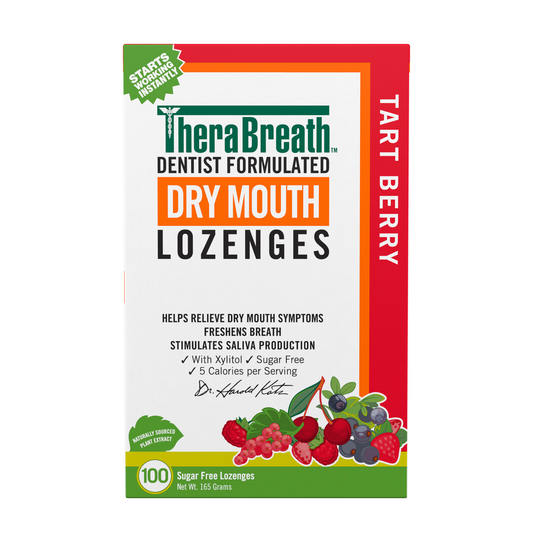
- Use a lozenge designed to enhance saliva flow, like TheraBreath Dry Mouth Lozenges, for extra comfort and to help relieve dry mouth symptoms.
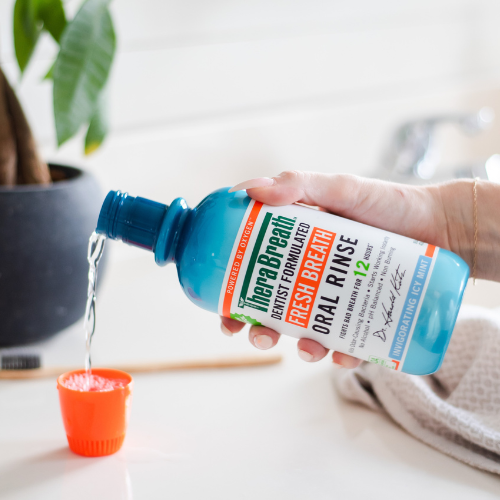
If throat irritation persists overnight, try switching to a non-alcoholic mouthwash, like TheraBreath Overnight Oral Rinse before bed. Its non-burning formula freshens breath while helping to rebuild weakened tooth enamel, strengthen teeth, and prevent cavities.
Drink Hot Tea Before Bedtime
Sipping chamomile tea — or your preferred nighttime tea — can help you relax and sleep more soundly. Warm tea, along with other warm liquids, helps thin mucus, reducing the symptoms of post nasal drip and helping you feel less irritated throughout the night [1].
Relieving Post-Nasal Drip Caused by GERD
If you have determined that reflux or GERD is a cause of your post-nasal drip, work on lifestyle modifications to treat the underlying issue. It has been found that in overweight patients, losing weight can significantly help lessen or even eliminate GERD symptoms [6].
For more immediate relief, try avoiding meals 2–3 hours prior to bed. This has been shown to help relieve symptoms in those with nocturnal GERD symptoms [6]. Adjusting your sleeping position will help here as well. You can sleep with your head elevated or sleep on your left side to promote healthy digestion [6].
Pregnancy, Kids & Post-Nasal Drip
Can Post-Nasal Drip Cause a Sore Throat During Pregnancy?
Yes. Hormonal changes during pregnancy can cause nasal swelling and increased mucus production, which may lead to throat irritation — especially at night [5].
Try pregnancy-safe options such as a nasal spray or rinse, staying hydrated, and elevating your sleeping position. Avoid over-the-counter decongestants unless approved by your doctor [5].
You can also reduce blood vessel swelling by exercising during the day, though you should check with your doctor to find the right amount of exercise for you during your pregnancy [5].
How to Treat Post-Nasal Drip in Toddlers
Children are especially prone to post-nasal drip when they have colds or allergies, because mucus drainage from the nose and sinuses into the throat is more easily triggered in developing airways [7, 8].
For safe nighttime relief, try these pediatrician-approved methods:
- Use a cool-mist humidifier at night.
- Offer plenty of fluids to stay hydrated and help thin mucus.
- Apply saline nasal drops or spray to keep nasal passages clear and moist.
- Gently elevate the head of the bed for easier breathing [1, 7].
If symptoms persist or worsen, consult a pediatric ENT to rule out sinus infections, enlarged adenoids, or chronic allergies [7].
When to See a Doctor
Most cases of post-nasal drip improve with simple home care, but contact a healthcare provider if symptoms persist more than 10 days, mucus turns green or yellow, or you experience fever, facial pain or pressure, or difficulty breathing or swallowing [1, 2].
An ENT or allergy specialist can identify and treat the underlying cause.
The Bottom Line
Sleeping with post-nasal drip can be frustrating, but relief is possible. Elevate your head, maintain moisture in your airways, and practice simple bedtime habits to ease drainage and soothe your throat.
If symptoms persist, consult your doctor for personalized care.
Sources
- Cleveland Clinic. Postnasal Drip: Symptoms & Treatment.
- WebMD. https://www.webmd.com/allergies/postnasal-drip
- Sleep Foundation. Best Sleeping Position for Breathing Problems.
- National Library of Medicine. Advances in upper airway cough syndrome.
- Cleveland Clinic. Pregnancy Rhinitis.
- Cleveland Clinic. GERD: A Practical Approach.
- Gao Z, Qin X, Wu H, et al. Upper airway cough syndrome in 103 children. Chinese Medical Journal. 2019 Mar 20;132(6):669–674. doi:10.1097/CM9.0000000000000120
- de Benedictis FM, Cancellieri C, de Benedictis D. Wet cough and nasal symptoms in children: Can we do better? Multidisciplinary Respiratory Medicine. 2019 Dec;14:45. doi:10.4081/mrm.2019.45
- https://cureallergyclinic.com/how-to-stop-nighttime-post-nasal-drip/
The information provided is for educational purposes only and is not intended as medical or professional advice. It should not be used as a substitute for consultation with qualified healthcare professionals. Always seek advice from a licensed medical professional or relevant experts before making any health-related decisions.