



Why at Home Teeth Cleaning Matters
Everyone knows that regular cleanings at the dentist are important. The removal of plaque, staining, checking for cavities and signs of gingivitis and gum disease all happen in those bi-annual (at least!) cleanings. But just as essential to the process is what happens in between cleanings at the dentist—teeth cleaning at home. Oral care starts in the home, with every day routines.
Most oral health problems begin at the gumline, where bacteria and plaque build up, potentially leading to gingivitis and other periodontal issues. Therefore, strong at home dental cleaning routines are what’s needed to keep a healthy mouth. To learn more about how to get rid of gingivitis at home, visit How to Get Rid of Gingivitis.
Your routine should include habits like twice daily brushing with the right toothbrush (manual or power) and using an effective toothpaste, such as TheraBreath™ Deep Clean™, can help head off those potential gum health issues as well as bad breath. TheraBreath™ Deep Clean™ is effective because it kills 99.9% of germs that cause bad breath, plaque, and gingivitis*, leaving your mouth with that clean and fresh feeling after brushing.
In addition to regularly brushing your teeth, it is essential that you clean between your teeth as that is where most dental problems begin. Here you should also use a high-quality product like the Waterpik™ water flosser.
Can You Do Teeth Cleanings at Home?
Yes, you can clean your teeth at home with daily brushing, flossing, and mouthwash — but only your dentist can remove tartar and check for gum disease.
As the American Dental Association (ADA) puts it1, “home oral care is an important contributor to oral health and can help lessen the need for extensive dental intervention in the future.” However, it has its limitations, and it is still recommended that patients go visit their dentists at least twice a year, though more frequent visits may be recommended based on the patient.
Dentists use special tools to clean deeper: such as scraping away tartar and administering fluoride treatments. They also do an oral examination, checking for cavities and signs of gum disease. Additionally, if they find anything during the oral exam, your dentist can recommend a treatment plan to help with your individual issues. While general advice works for many patients, those at higher risk may need more specialized guidance and care.
How Do I Deep Clean My Teeth at Home?
To deep clean your teeth at home, brush twice daily with fluoride toothpaste, floss, and rinse with mouthwash. The ADA notes1 that following this routine will help patients prevent cavities and gingivitis. Toothpastes like TheraBreath™ Deep Clean™ can be effective, as it kills 99.9% of germs that cause bad breath, plaque, and gingivitis*.
Step-by-Step Routine for an Effective Clean
Having an effective routine for a good at-home clean is as easy as 1-2-3:
- Brush your teeth twice daily with a fluoride toothpaste
- Choose the right toothpaste
- Clean between your teeth
- Use a good mouthwash
Let’s get into the details of why this is such an effective strategy:
Step 1: Brush Your Teeth Twice Daily With a Fluoride Toothpaste:

Per the ADA, the fraction of cavities prevented in children and adolescents ranged from 16% to 31% compared to a placebo or no toothpaste. Two minutes per brushing was also found to be optimal versus only one minute for a greater reduction in plaque. This can be broken down by thirty seconds per quadrant, or four seconds per tooth.
Choose the Right Toothpaste
Choosing the right toothpaste, even beyond just a simple fluoride toothpaste, can also have other benefits. TheraBreath™ Deep Clean™ toothpaste, for example, targets bad breath and gingivitis. It kills 99.9% of germs that cause bad breath, plaque, and gingivitis*, is non-acidic, and gently whitens. If you're also looking to brighten your smile, learn more about how you can whiten your teeth at home.
Step 2: Floss
Floss daily to clean between your teeth (also known as interdental cleaning). Flossing is important for oral health, and can be achieved in a number of ways, including string floss, interdental brushes, water flossers, and toothpicks. While these range in benefits, the ADA notes that many patients are put off by the idea of flossing, and therefore, “the best method for any given patient will be the one that they will regularly perform.”
Step 3: Use a Good Mouthwash

Use, or at least try, a good mouthwash. Fluoride mouthwash is especially helpful for children, who are generally known to be at high risk for cavities. Adults who have elevated risks can benefit as well.
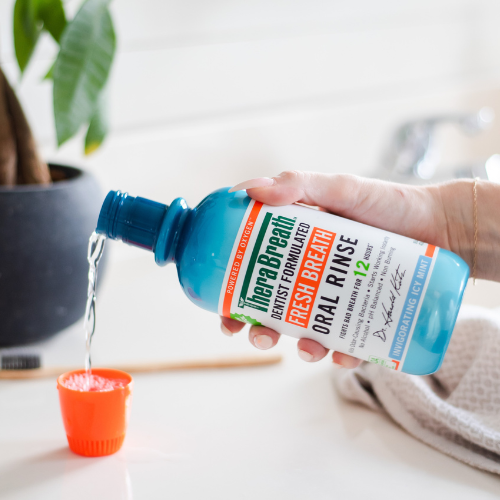
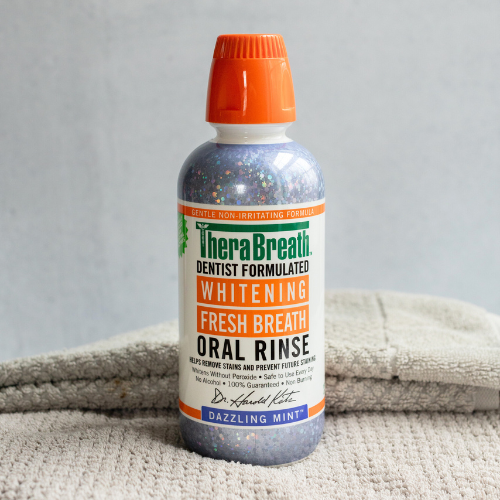
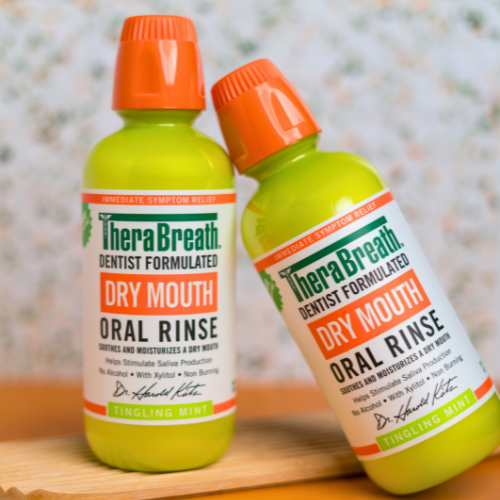
Other types of mouthwash can also be beneficial for preventing and fighting against variety of issues, including bad breath, staining, gum disease, and gingivitis. Pair TheraBreath™ Fresh Breath Mouthwash with TheraBreath™ Deep Clean™ Toothpaste for a complete oral care routine you’ll love!
Do I Need Special Tools to Clean My Teeth at Home?
No, you don’t need special tools — a soft-bristled toothbrush and floss may be enough when done correctly. However, power toothbrushes and water flossers can make cleaning easier and more effective.
Power Toothbrush vs. Manual Toothbrushes:
According to the ADA2, both can be very effective, as long as you’re choosing one with soft bristles so that you don’t damage your gums and enamel. That being said, many power toothbrushes have built in timers, and even have 30-second quadrant pacers, so that patients can properly time their brushing.
Power toothbrushes are also helpful for those with limited dexterity1, or for those who feel that they aren’t getting enough of a clean with their manual toothbrushes. When in doubt, patients can always consult with their dentists for recommendations on a toothbrush that is right for them and their routine.
String Floss vs. Water Flossers:
There are a number of tools3 you can use to clean the space between your teeth. Standard string floss, dental picks, interproximal brushes, and water flossers can all be beneficial. Some products are easier to use than others.
The Waterpik™ water flosser is easy to use and backed by more than 80 scientific studies. It is clinically proven to reduce bleeding gums and inflammation in just two weeks. Because it is easy to use, it can help remove bacterial plaque and debris from hard-to-reach areas like under the gumline and back teeth.
What Happens if I Don’t Clean My Teeth Regularly?
Plaque4 is a sticky film that covers your teeth. The reason why it’s so harmful is that after a meal or snack that contains sugar, the bacteria in plaque releases acid that attacks tooth enamel. If this happens repeatedly, it can cause the erosion of the enamel, and eventually results in cavities.
Even more concerning, is what plaque turns into when it is not removed with regular brushing and flossing - tartar. Once plaque hardens into tartar, it is much harder to keep your teeth clean.
If plaque isn't removed, it can also contribute to gingivitis; the bacteria in plaque collects above the gumline and the gum tissue swells and starts to bleed; these can be early signs of gum disease. This can be avoided with good, daily oral hygiene routine, and visits to the dentist.
Can I Scrape Tartar off My Teeth Myself?
No, you should not scrape tartar off your teeth yourself. Plaque can be cleaned at home, but tartar requires professional removal by a dentist.
Which Toothpaste is Best for Cleaning Your Teeth at Home?
As previously stated in this article, a fluoride toothpaste is essential, but how to know which fluoride toothpaste to choose?
If a top concern is steering clear of gingivitis, bad breath, and coming away from brushing with that epic fresh and clean experience, TheraBreath™ Deep Clean™ toothpaste is an exceptional choice. It is dentist formulated, fights bad breath for 12 hours, uses stannous fluoride, is pH-balanced (non-acidic), gently whitens, and kills 99.9% of germs that cause bad breath, plaque, and gingivitis*. Order TheraBreath™ Deep Clean™ toothpaste for your home.
Final Tips for a Clean, Healthy Mouth
The fact of the matter is that consistency is key. The best type of toothbrush, toothpaste, floss, and mouthwash is the one that you will use on a regular basis so that plaque doesn’t build up and lead to larger issues like gingivitis and gum disease.
Remember: oral care is self care! That includes both teeth cleaning at home and visits to your dentist. Explore more TheraBreath products for your home oral hygiene routine, including the full line of mouthwashes and toothpastes.
*in laboratory tests
Sources
- American Dental Association. Home Oral Care
- American Dental Association. Toothbrush
- American Dental Association. Flossing
- American Dental Association. Plaque


